
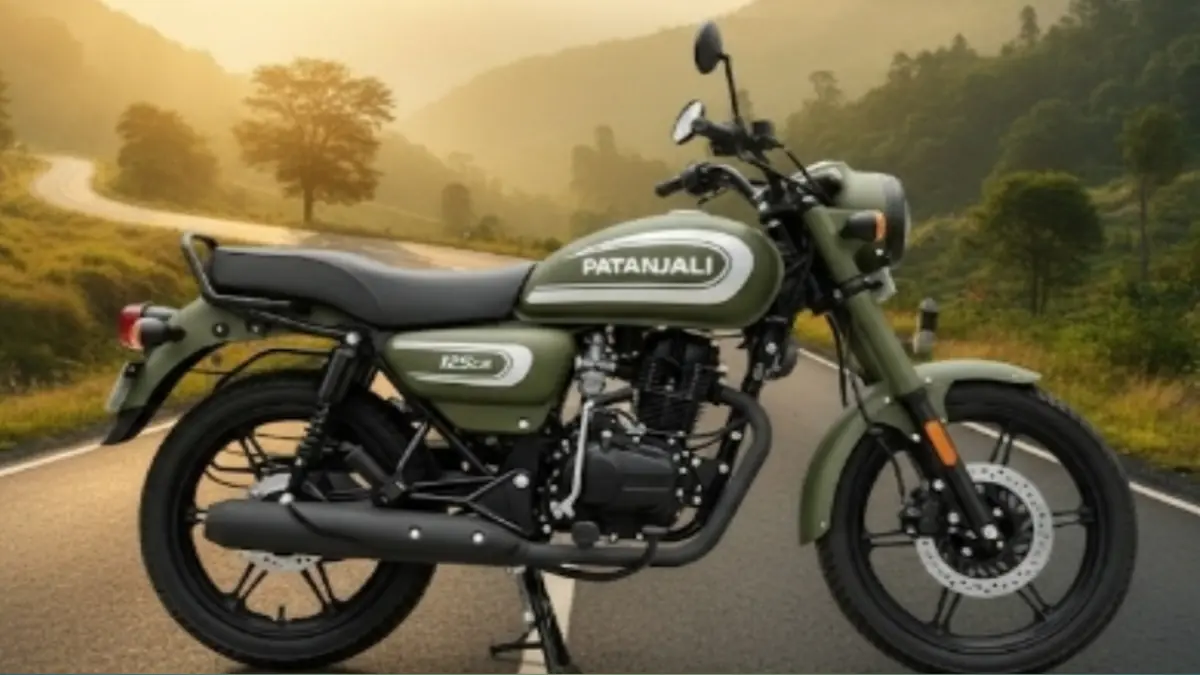
Patanjali has brought a new model electric bike to the market.
which has been designed keeping daily usage in mind.
This bike can play an important role in the future by making .
electric mobility accessible to common people.
Patanjali Electric Bike: A New Dream of Affordable and Swadeshi Electric Mobility with 180 km Range and 60 km/h Top Speed
In recent years, India has witnessed a massive transformation in the two-wheeler industry. Rising fuel prices, increasing pollution, and growing awareness about sustainable living have pushed millions of Indian consumers toward electric mobility. While many private and foreign brands are competing in this space, the idea of a Patanjali Electric Bike has created a unique buzz among people who believe in Swadeshi, affordability, and long-term value.
Patanjali, a brand that became a household name by promoting indigenous products, Ayurveda, and self-reliance, is now being linked with the electric vehicle revolution. The concept of a Patanjali Electric Bike offering a 180 km range and a top speed of 60 km/h at an affordable price feels like a dream for middle-class India—but it is a dream that many believe could soon become reality.
The Vision Behind Patanjali Electric Bike
Patanjali has always positioned itself as more than just a business brand. It represents a movement—Atmanirbhar Bharat. If Patanjali enters the electric two-wheeler segment, its primary goal would likely be mass adoption, not luxury.
Unlike premium electric bikes designed mainly for urban elites, the Patanjali Electric Bike is expected to focus on:
- Affordable pricing
- Low running cost
- Simple and durable design
- Indian road conditions
- Rural and semi-urban users
The idea is to make electric mobility accessible to the common Indian, including students, daily commuters, small business owners, and farmers.
Expected Range: Up to 180 Kilometers on a Single Charge
One of the most talked-about highlights of the Patanjali Electric Bike concept is its claimed range of up to 180 km. If achieved in real-world conditions, this would place it among the best electric bikes in the affordable segment.
Why 180 km Range Matters
For Indian riders, range anxiety is one of the biggest concerns. A long range means:
- Less frequent charging
- Better usability in rural areas
- Suitable for daily office travel
- Ideal for delivery and business use
A 180 km range would allow users to ride for 4–5 days on a single charge, depending on daily usage. This makes the bike extremely practical and economical.
Top Speed of 60 km/h – Balanced and Safe
The expected top speed of 60 km/h suggests that the Patanjali Electric Bike is designed for safe and efficient commuting, not aggressive racing.
This speed is:
- Perfect for city traffic
- Comfortable for highway short trips
- Suitable for beginners and elderly riders
- Energy-efficient and battery-friendly
Rather than focusing on extreme performance, Patanjali appears to be prioritizing stability, safety, and long battery life.
Battery Technology and Charging Expectations
Although official specifications are not yet confirmed, the Patanjali Electric Bike is expected to feature a high-capacity lithium-ion battery, optimized for Indian weather conditions.
Expected Charging Features:
- Home charging compatibility
- Low electricity consumption
- Charging time between 4 to 6 hours
- Long battery life cycle
If Patanjali adopts locally manufactured battery packs, it could significantly reduce costs and strengthen India’s EV ecosystem.
Design Philosophy: Simple, Strong, and Indian
Unlike flashy electric bikes with futuristic designs, the Patanjali Electric Bike is expected to follow a simple and functional design approach.
Design Highlights May Include:
- Lightweight frame
- Comfortable upright seating
- Strong suspension for bad roads
- Minimal plastic usage
- Durable body panels
This design philosophy aligns perfectly with Patanjali’s core values—utility over luxury.
Features That Matter to Indian Riders
Instead of unnecessary high-end electronics, the Patanjali Electric Bike is likely to focus on essential and practical features, such as:
- Digital speedometer
- Battery level indicator
- LED headlamp
- Mobile charging port
- Anti-theft system
- Side-stand sensor
These features improve daily convenience without increasing the overall cost.
Affordability: The Biggest Strength
Affordability is where Patanjali could truly disrupt the electric bike market. If launched, the Patanjali Electric Bike is expected to be priced significantly lower than many competitors.
Why Affordable Pricing Is Possible:
- Indigenous manufacturing
- Simplified design
- Local sourcing of components
- High-volume production strategy
This could make the bike a strong alternative to petrol motorcycles, especially for budget-conscious buyers.
Running Cost: Almost Negligible
Electric bikes are already cheaper to run than petrol bikes, and Patanjali’s approach could further reduce ownership costs.
Estimated Benefits:
- Extremely low cost per kilometer
- Minimal maintenance
- No engine oil changes
- Fewer moving parts
For daily commuters, this could mean huge savings over time, especially when compared to rising fuel prices.
Environmental Impact and Swadeshi Appeal
The Patanjali Electric Bike symbolizes more than just transportation—it represents a shift toward clean, green, and self-reliant India.
By reducing carbon emissions and dependency on fossil fuels, such a bike could play a crucial role in:
- Lowering air pollution
- Promoting renewable energy
- Supporting local industries
For buyers who believe in Swadeshi products, this emotional connection could be a major buying factor.
Target Customers
The Patanjali Electric Bike is expected to attract a wide range of users, including:
- College students
- Office commuters
- Small shop owners
- Delivery riders
- Rural users
- First-time EV buyers
Its balanced performance and affordability make it suitable for almost every Indian household.
Challenges and Market Competition
Despite the strong concept, Patanjali would face challenges such as:
- Established EV brands
- Charging infrastructure limitations
- Consumer trust in new EV technology
- After-sales service network
However, Patanjali’s strong brand recognition and loyal customer base could help overcome many of these challenges.
https://www.tatabikes.com/bikes
Future Potential
If successful, the Patanjali Electric Bike could open doors to:
- Electric scooters
- Electric cycles
- Electric three-wheelers
- Affordable EV batteries
This could position Patanjali as a major player in India’s electric mobility revolution.
A Dream That Could Change Indian Roads
The idea of a Patanjali Electric Bike with 180 km range and 60 km/h speed is more than just a rumor—it reflects what millions of Indians want today: affordable, reliable, and Swadeshi electric mobility.
If Patanjali turns this vision into reality, it could redefine the electric two-wheeler market and make clean transportation accessible to everyone. Until then, the Patanjali Electric Bike remains a powerful symbol of hope, innovation, and self-reliance in India’s journey toward a greener future.
As electric mobility continues to expand across India, buyers are no longer satisfied with just low prices or long range. Today’s customers want reliability, safety, comfort, and real-world usability. In this context, the Patanjali Electric Bike concept becomes even more interesting, as it promises to deliver a practical balance between performance and affordability.
In this second part, we explore the expected performance, riding experience, safety features, charging ecosystem, and daily usability of the Patanjali Electric Bike.
Real-World Performance Expectations
While a claimed range of 180 km sounds impressive, what truly matters is real-world performance. Patanjali’s electric bike is expected to be tuned for Indian road and traffic conditions rather than laboratory testing.
Expected Riding Characteristics:
- Smooth throttle response
- Linear acceleration suitable for city use
- Silent and vibration-free ride
- Stable handling at moderate speeds
With a top speed of 60 km/h, the bike would focus more on efficiency than aggression, making it ideal for stop-and-go traffic and long daily commutes.
Motor and Power Delivery
The Patanjali Electric Bike is likely to be powered by a hub motor or mid-drive motor, optimized for torque rather than high speed.
Expected Motor Highlights:
- Strong low-end torque
- Easy uphill climbing
- Smooth pickup even with load
- Minimal heat generation
Such power delivery is perfect for Indian riders who often carry passengers, groceries, or work equipment.
Riding Comfort and Ergonomics
Comfort plays a crucial role in daily commuting, especially for Indian riders who travel long distances on uneven roads. The Patanjali Electric Bike is expected to prioritize rider comfort over sporty posture.
Comfort-Focused Design May Include:
- Wide and cushioned seat
- Upright riding posture
- Soft suspension setup
- Well-positioned foot pegs
This makes the bike suitable for all age groups, including senior citizens and first-time riders.
Suspension and Braking System
To handle rough roads, speed breakers, and potholes, the bike is expected to come with a robust suspension system.
Suspension Expectations:
- Telescopic front forks
- Dual rear shock absorbers
- Tuned for comfort rather than stiffness
Braking Setup:
- Front disc brake
- Rear drum or disc brake
- Combined braking system (CBS)
This setup ensures safe stopping power, even at full load.
Safety Features for Everyday Use
Safety is often overlooked in budget vehicles, but Patanjali is expected to include essential safety features without increasing the cost significantly.
Expected Safety Features:
- Side-stand engine cut-off
- Anti-theft alarm
- LED headlamp for better visibility
- Reflective body elements
- Battery protection system
These features are especially useful for night riding and crowded urban roads.
Battery Safety and Thermal Management
Battery safety is a critical factor in electric vehicles, especially in India’s hot climate. The Patanjali Electric Bike is expected to use advanced battery management systems (BMS).
Battery Protection May Include:
- Overcharge protection
- Short-circuit prevention
- Temperature monitoring
- Fire-resistant casing
This would ensure long-term reliability and rider confidence.
Charging Infrastructure and Home Charging
Charging convenience is one of the biggest advantages of electric bikes. The Patanjali Electric Bike is expected to support simple home charging.
Charging Benefits:
- Can be charged using a normal household socket
- No need for expensive charging stations
- Suitable for villages and small towns
This makes electric mobility more inclusive, especially for rural India.
Maintenance and Service Expectations
One of the strongest advantages of electric bikes is low maintenance, and Patanjali could further simplify servicing.
Maintenance Benefits:
- No engine oil
- No clutch or gearbox
- Fewer moving parts
- Lower service costs
With Patanjali’s existing nationwide network, service accessibility could become a major strength.
Use in Rural and Semi-Urban Areas
Unlike many electric bikes focused only on cities, the Patanjali Electric Bike concept seems well-suited for rural India.
Why It Works in Rural Areas:
- Long riding range
- Strong torque for bad roads
- Home charging facility
- Low operating cost
This could make it a preferred option for farmers, small traders, and daily wage workers.
Economic Impact for Daily Users
For a regular commuter, switching to an electric bike can significantly reduce monthly expenses.
Estimated Savings:
- Very low cost per kilometer
- Reduced maintenance expenses
- No fuel price fluctuations
Over a few years, the Patanjali Electric Bike could offer huge long-term savings compared to petrol motorcycles.
Comparison with Petrol Bikes (Concept Level)
When compared to entry-level petrol bikes, the Patanjali Electric Bike stands out in several areas:
- Zero emissions
- Silent operation
- Lower running cost
- Less mechanical complexity
While petrol bikes still offer higher speeds, the electric bike wins in daily practicality.
Conclusion
The Patanjali Electric Bike, with its expected 180 km range, 60 km/h top speed, and practical design, appears to be a well-thought-out concept for the Indian market. Rather than chasing performance numbers, it focuses on comfort, safety, affordability, and real-world usability.
If launched with the right pricing and support, it could become a game-changer for middle-class and rural India, pushing the nation closer to a cleaner and more self-reliant future.